
An Inside Job

I don’t know if you’ve seen the TV show Waiting For The Out, but it’s brilliant. Based on Andy West’s also brilliant memoir The Life Inside, it centres on the experiences of a guy who teaches philosophy in a prison. On the surface that might not be an alluring premise for a show or a book but, along with Small Prophets and Under Salt Marsh, it’s been one of my TV highlights of the year, just as the book was when it came out in 2022.
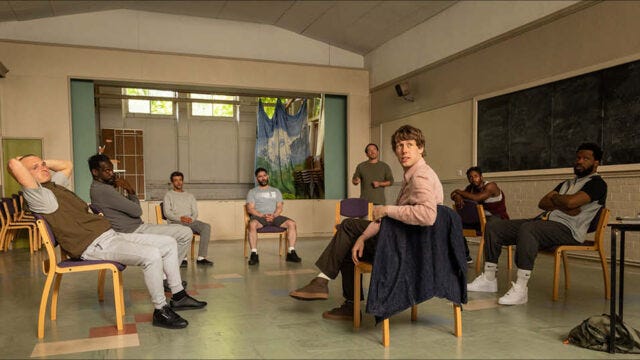
Over the last month, I’ve found myself thinking about Waiting for the Out a lot as I’ve just finished a long run of teaching life writing in prisons and am preparing to do more of it in the coming months. Much like the teaching of philosophy, the conversations that life writing encourages have a way of cracking people open and revealing deeper ideas. I can’t say what enduring effect those conversations might have had on the guys once they headed back to their wings after the sessions, but leaving each prison at the end of the day I know that they always had an effect on me.
“I’m not a bad person,” one inmate told me recently, “I’ve just done bad things. I know I deserve to be punished but I don’t deserve to be written off.”
In most cases, I agree with him. I don’t believe that all criminals are fundamentally bad people and have yet to encounter a single one who claims to be innocent of their crimes. Most often, they are people who, for whatever reason, have fucked up. It does have to be said that I also don’t believe prisons are solely a holding pen for rough diamonds and misunderstood angels. There’s no doubt that there are some people in prison who are, by any definition, “bad” and don’t flinch from that fact or consider themselves anything but. I generally don’t get to meet those people. The men for whom a creative writing class appeals tend not to be the same as those who have a professional interest in removing people’s fingers. That said, my sessions always come with the promise of biscuits and that is the great leveler, so I’ve met a few people whose reputations shift the atmosphere in a room when they arrive and whom no one challenges for taking too many chocolate digestives. While I have heard an awful lot of things (and a lot of awful things) during these sessions, what does always stand out to me is the starting point so many of the men I speak to have had.
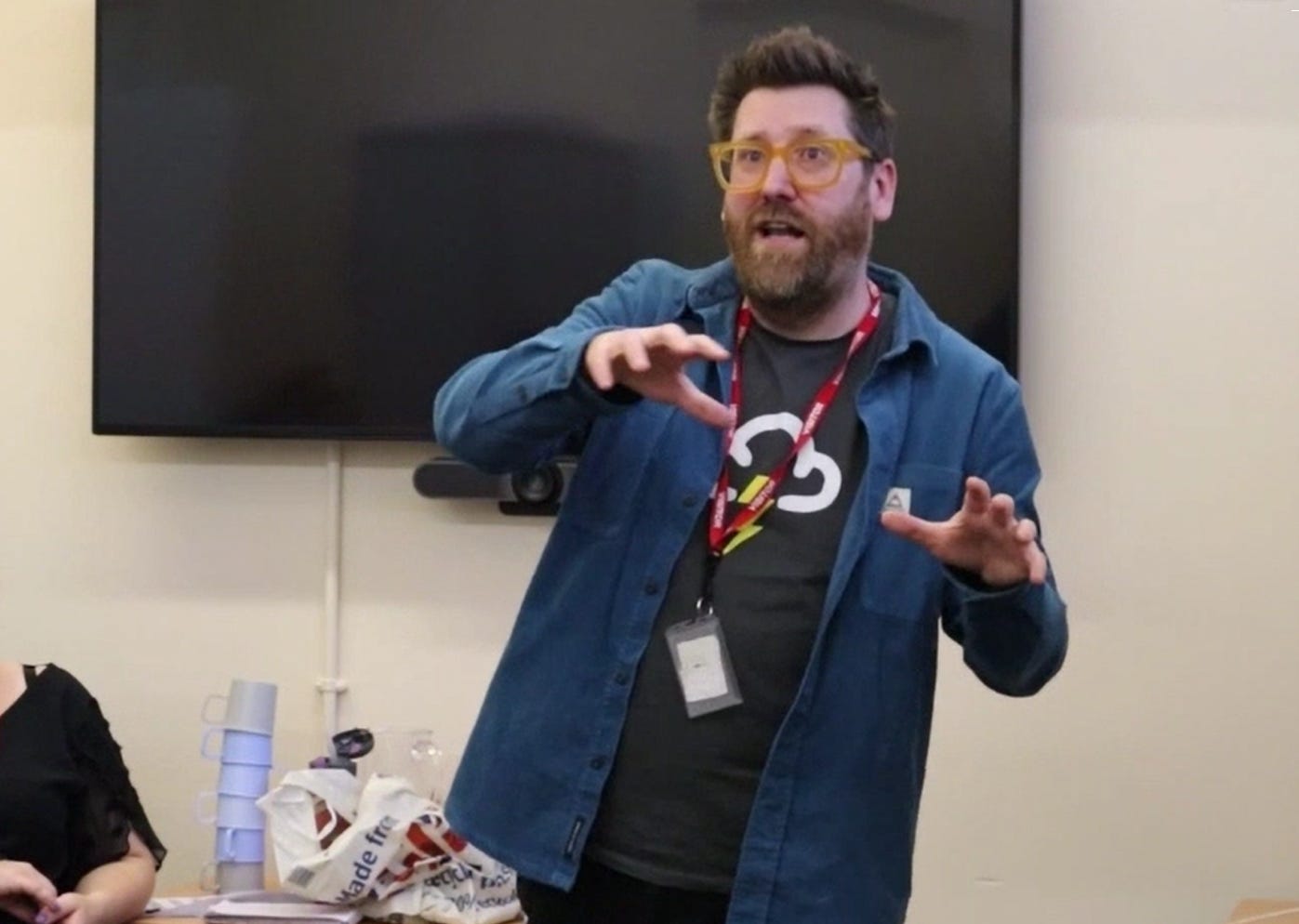
During the writing exercises, I purposely steer clear of the more challenging stories from prisoner’s lives and what they might be inside for. Unlike writing workshops on the outside, where attendees often arrive ready to discuss the worst thing that has ever happened to them and are encouraged to go down that rabbit hole to discover greater meaning, in prison I understandably don’t nudge anyone in that direction from the off. Instead, I get the guys to focus on lighter stories. Inevitably though, once everyone starts reading out the work they’ve produced and open discussion begins, I still end up hearing tales that will remain with me for the rest of my life. I hear stories about challenging beginnings, terrible experiences, violence, abuse, betrayal, so many of which end with the words “…but he’s dead now,” that I’ve long ago lost count of the number.
At a prison recently, I listened to a man, let’s pretend his name was Martin, read to the group from his in-progress memoir. It began with a description of his birth, where members of social services were waiting in the maternity ward to immediately take him into care. By the age of 6, “Martin” found himself in the darkest parts of the foster system, suffering terrible abuse and experiencing years of homelessness and drug addiction. So far he has been convicted 48 times for various robbery-related crimes and when he is released following his latest offence, he admitted to me that it’s likely he’ll be back for a 49th. Hearing him speak about his life, I found that I couldn’t help but think of Ethan Couch.
When he was 16, Couch killed four people in Texas while driving on a restricted licence and under the influence of drugs. He was speeding through a residential area when he lost control of his vehicle and crashed into a group of people. As well as killing four, he also injured nine others, one of whom was left completely paralysed. While Couch was convicted of intoxication manslaughter for recklessly driving under the influence, he was only sentenced to ten years probation and therapy. Before sentencing, his legal team had argued that Couch suffered from “affluenza”, a condition that left him unable to link his actions with the consequences because he had been raised to believe that wealth buys privilege. His lawyers stressed that Couch needed rehabilitation instead of prison, claiming that he had no understanding of boundaries as his affluent parents had never given him any. Essentially, he was too rich and privileged to know better and should be granted leniency.
“Martin”, born without privilege, was never going to be afforded the same luxury and was all but doomed from the start. While it is true that many people who experience a tough upbringing thrive and become productive members of society, the odds of doing so are stacked against them. And if they do screw up, they generally don’t have the support and resources they require to help them out of their situation.
My younger brother, Ben was one of those people who screwed up. In 2013 he was convicted of minor drug offences and possession of a taser, the latter of which carried a mandatory 5 year sentence. I was terrified for him, imagining his years inside playing out like the depictions I’d seen in TV crime dramas. But he made the most of the kinds of classes I have ended up teaching. He studied computing, assisted with other prisoner’s sentence plans and eventually trained as a chef, which transformed his life. He has has since been head chef in several restaurants and has no intention of ever seeing the inside of a prison again. When it came to writing my second book of personal essays, Broken Biscuits and Other Male Failures, he made it clear to me that he wanted his story to be included.
“I’m an inspiration!” he said, only half joking as he tapped proudly at his chest. “People need to hear my story.”
And he should be proud, that turnaround in his fortunes is largely down to his hard work and determination. But he also benefits from a big, supportive family who have always been there to care for him and make sure his life never needs to take him back inside. Not everyone is so lucky.
When I return to a prison for more teaching next month, I’ve no doubt that I’ll be hearing the same sorts of stories that I’ve grown used to. Meeting more Martins and never an Ethan Couch. The solution to this is societal and far too big for me to fix. I have no radical answer and I’m not sure a solution will ever be found. But what I can do is listen, encourage and find ways for these men to understand themselves and their stories. In these classrooms, watching men sharing their life experiences, I have seen transformative things. The showing of empathy and tenderness that only seemed to click for these men after they opened up and explained to each other where they came from and how their lives reached a crisis point. Hopefully, through a combination of doggedness, luck and support, they will permanently escape from the trap they have found themselves in. And hope is powerful, especially when it’s the only privilege you have left.
Any other business:
What I’ve been reading: A Place Both Wonderful and Strange: The Extraordinary Untold History of Twin Peaks by Scott Meslow. In 1990, Twin Peaks left a mark on me that has never faded and this book details the birth, death and rebirth of the show, providing information I’d never read anywhere else. It’s also an inspiring example of how, in common with so many books, movies and albums, wonderful things can come from complete chaos, happy accidents and taking risks.
What I’ve been listening to: A few days ago, my daughter Effie and I watched the Jeff Buckley documentary, It’s Never Over. I’ve been a huge fan of Buckley since ‘95 but watching that documentary had me listening to and appreciating him in a new way, because I got to share him with Effie. Since then we’ve been talking about him a lot and sharing clips, so I’ve been relistening to everything he did, including the documentary soundtrack.
What I’ve been doing: Teaching, writing a pitch for a new book, writing essays, planning for more teaching, doing an incredibly fun event at the wonderful Chorley Theatre and finally signing with an agent. It’s been lovely. Oh, and turning 50.
What I’ll be doing: On June 13th I have two things happening in Ilkley. First, I’ll be running a memoir writing workshop (1pm-4:30pm) with my friend and mentor Jenn Ashworth, followed by an event together (5:30pm-7pm) at the wonderful, always welcoming The Grove bookshop. 2014 me, who nervously approached Jenn at a spoken word event in Manchester and asked her for advice when I was in the baby steps of my writing career, would not be able to believe this. I’ll also be doing an evening event at the beautiful Booka Bookshop in Oswestry on June 18th for Independent Bookshop Week.
I really enjoyed this, thank you for sharing! I watched Waiting For The Out also and found it utterly brilliant!
Congrats on your agent! Is it a new one? 🤔 And happy 50th! 🥳